National Museum of Egyptian Civilization (NMEC)
Egypt’s comprehensive museum of civilization in the heart of Old Cairo
The National Museum of Egyptian Civilization (NMEC) presents a comprehensive narrative of Egypt’s history from prehistoric times to the modern era. Located in Fustat, one of the oldest parts of Cairo, the museum offers a structured and chronological journey through thousands of years of cultural development.
Unlike older institutions that focus primarily on Pharaonic antiquities, NMEC brings together artifacts from Pharaonic, Greco-Roman, Coptic, Islamic, and modern periods under one roof. Its curated layout, contemporary exhibition design, and thematic galleries make it one of Cairo’s most accessible and educational museum experiences.
The museum gained international attention with the transfer of the Royal Mummies, now displayed in a purpose-built gallery that allows visitors to encounter some of Egypt’s most significant rulers in a carefully controlled environment.
History & Significance
The National Museum of Egyptian Civilization was designed as a modern, purpose-built institution that reflects contemporary museum standards in both architecture and exhibition design. The structure combines clean geometric lines with large open spaces, natural light, and controlled interior environments tailored to the preservation of sensitive artifacts.
Situated beside Ain El-Sira Lake in Fustat, the museum’s layout integrates the surrounding landscape into the visitor experience. Wide entrance plazas, panoramic terraces, and carefully planned circulation routes guide visitors through a clearly structured spatial sequence.
In terms of scale, NMEC is significantly more curated than older museums in Cairo. Rather than overwhelming visitors with density, the building supports a thematic and chronological presentation, allowing each gallery to breathe while maintaining a comprehensive narrative of Egyptian civilization.
Architecture & Scale
The Egyptian Museum was designed at the end of the 19th century as a purpose-built institution to house Egypt’s rapidly expanding national collection of antiquities. The building, designed by French architect Marcel Dourgnon and opened in 1902, follows a neoclassical architectural language that was typical for major European museums of the time.
Its scale was conceived to impress: wide ceremonial halls, high ceilings, long axial corridors, and large window openings create a sense of monumentality even before engaging with the artifacts themselves. The architecture was intentionally restrained in decoration, allowing statues, reliefs, and sarcophagi to dominate the visual experience.
Unlike modern museum concepts, the building was never designed for sparse or highly curated displays. Instead, it functions as a vast container for objects, where the physical mass of the collection mirrors the sheer scale of ancient Egyptian civilization.
Visiting the Museum Today
Visiting NMEC today offers a structured and clearly curated museum experience. The galleries follow a chronological and thematic approach, guiding visitors through the development of Egyptian civilization from early settlements to the modern state.
The exhibition design emphasizes clarity, spacing, and interpretation. Informational panels, lighting, and object placement are carefully coordinated, making the museum accessible even for visitors without prior background knowledge. Compared to older institutions in Cairo, the experience feels more linear and easier to navigate.
The Royal Mummies Hall is a highlight of the visit. Presented in a controlled and respectful environment, it allows visitors to encounter Egypt’s rulers in a setting that balances historical significance with modern conservation standards.
Opening Hours
The National Museum of Egyptian Civilization is open daily. Visitors are advised to arrive well before the final admission time to ensure sufficient time inside the galleries.
| Day | Opening Hours | Last Ticket Admission |
|---|---|---|
| Monday | 09:00 – 16:00 | 15:00 |
| Tuesday | 09:00 – 16:00 | 15:00 |
| Wednesday | 09:00 – 16:00 | 15:00 |
| Thursday | 09:00 – 16:00 | 15:00 |
| Friday | 09:00 – 16:00 | 15:00 |
| Saturday | 09:00 – 16:00 | 15:00 |
| Sunday | 09:00 – 16:00 | 15:00 |
Tickets & Entrance Fees
Ticket prices at NMEC vary depending on nationality and visitor status. Tickets are purchased on site.
| Visitor Category | Adult | Student |
|---|---|---|
| Egyptian | EGP 90 | EGP 45 |
| Arab | EGP 550 | EGP 300 |
| Other Nationalities | EGP 550 | EGP 300 |
Free entry is available for specific categories of Egyptian visitors, including children under 6, seniors over 60, people with special needs (plus one caregiver), war veterans, and selected student groups. Exemptions do not apply on Fridays, Saturdays, or national holidays, and official documentation may be required.
How to Get There
NMEC is located in Fustat (Old Cairo), close to Ain El-Sira Lake. The museum is not directly connected to the metro by a station at its doorstep, so most visitors arrive by taxi or ride-hailing services. If you prefer public transport, you can combine the metro with a short taxi ride for the final stretch.
| Transport | Lines / Route | Stop / Walking Distance |
|---|---|---|
| Taxi / Ride-hailing | – | Direct drop-off at NMEC (main entrance) |
| Metro + Taxi | Metro to Old Cairo area | Continue by taxi to NMEC (short ride) |
| Private Driver / Tour | – | Convenient option if combining multiple sights in one day |
Traffic can be heavy, especially in central Cairo. If you have a timed ticket or a guided tour, plan extra buffer time for arrival. The museum complex is clearly signposted on site.
National Museum of Egyptian Civilization
Highlights & Galleries
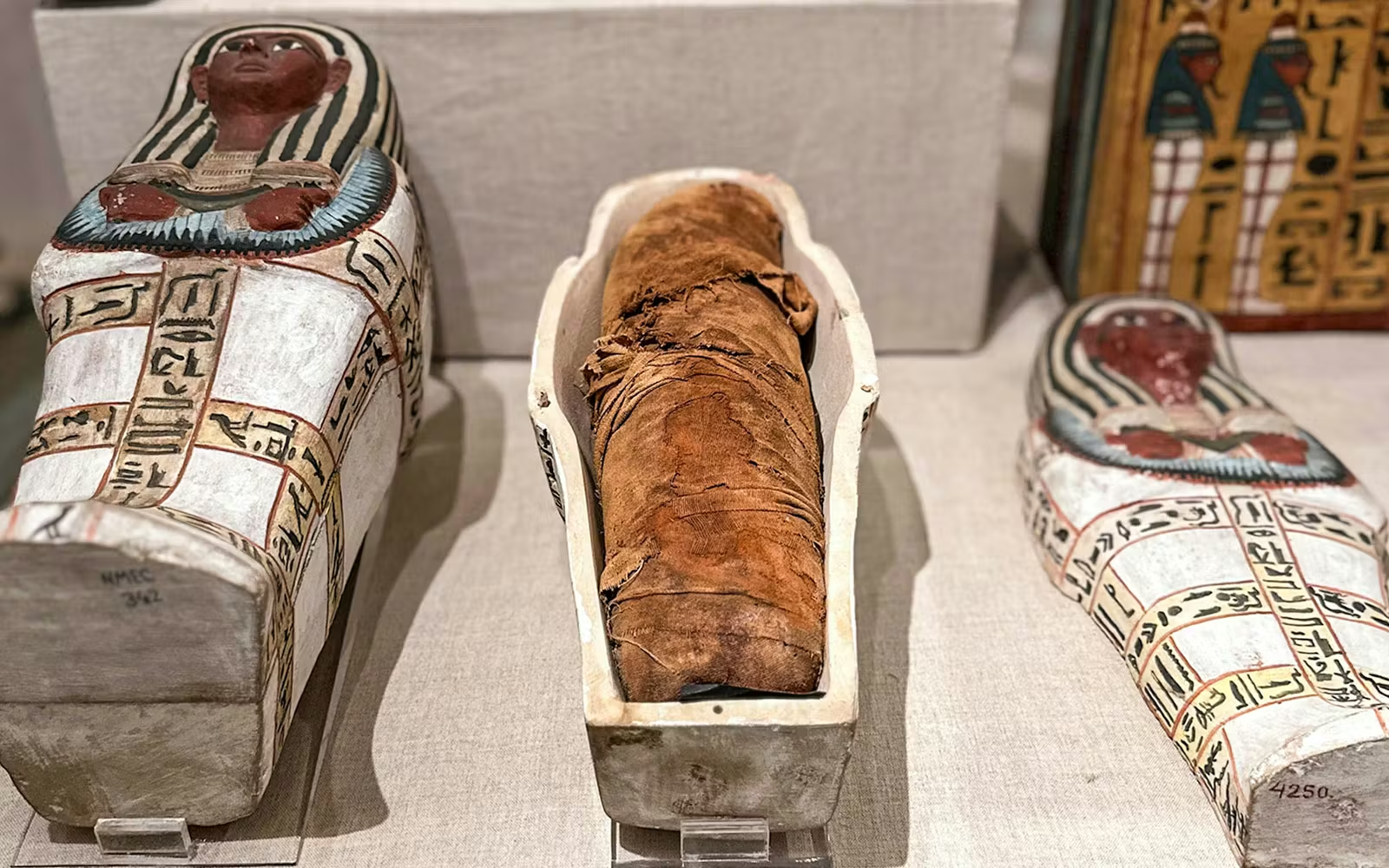
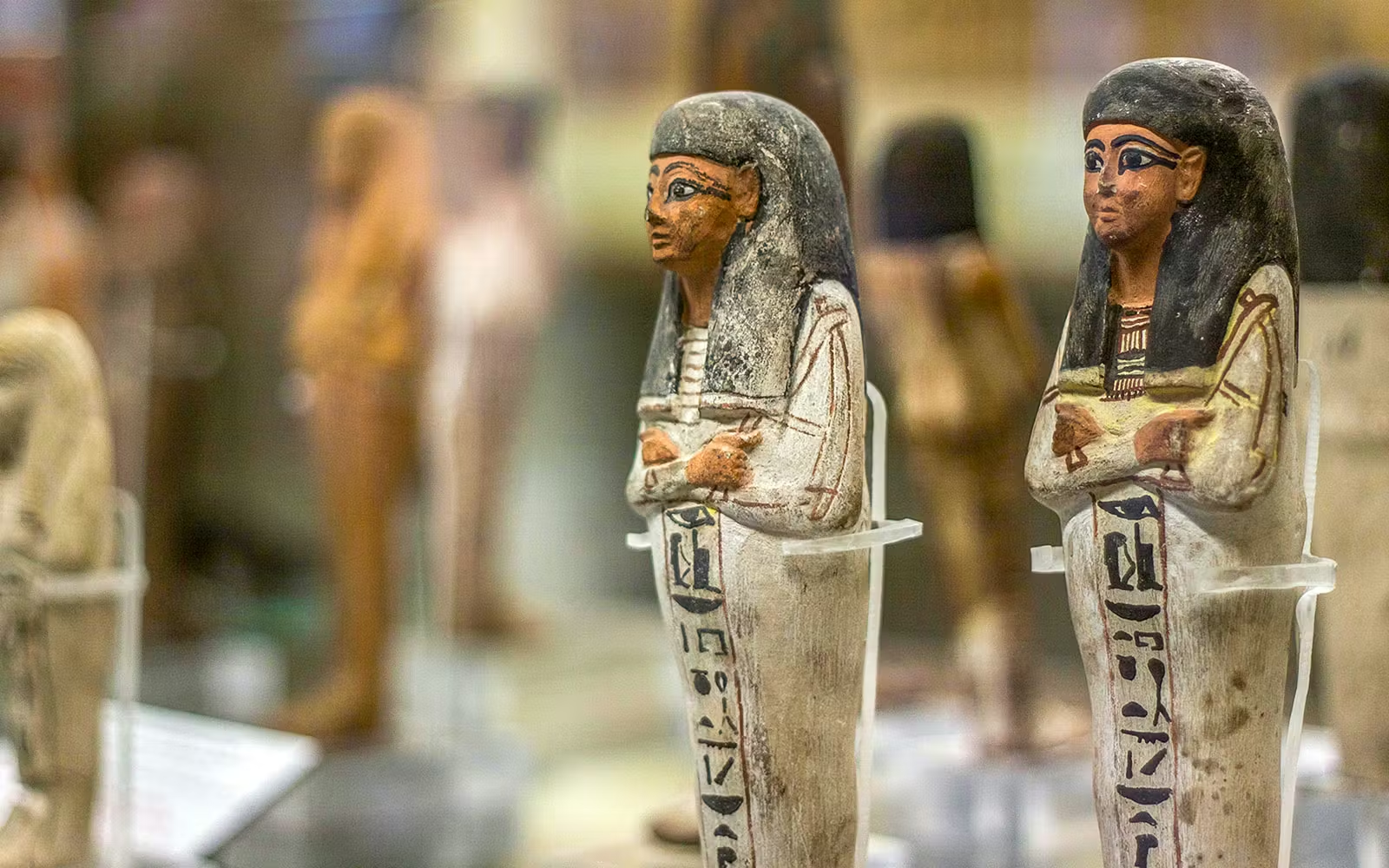
NMEC presents Egyptian history through a structured, thematic approach rather than a purely object-driven display. The galleries guide visitors chronologically, showing how culture, religion, craftsmanship, and daily life evolved across different historical periods.
The Royal Mummies Hall is the museum’s most internationally recognized highlight. Displayed in a carefully controlled environment, it presents Egypt’s rulers in a dignified and scientifically managed setting that emphasizes conservation and historical context.
Beyond the mummies, the central exhibition hall connects Pharaonic, Greco-Roman, Coptic, Islamic, and modern eras in one continuous narrative. The curated layout, lighting, and interpretive panels make this museum especially accessible for first-time visitors seeking a comprehensive overview of Egyptian civilization.